
Foundations of
Nutritional Understanding
A comprehensive exploration of balanced sustenance, food composition, and the principles that underpin a thoughtful relationship with what we eat.
Explore the Resource
Pillars of a Balanced Diet
A balanced diet rests upon several foundational components, each fulfilling a distinct role in the sustained operation of the human body. Understanding these pillars provides context for interpreting the broader landscape of nutrition.
Carbohydrates
Carbohydrates serve as the body's primary fuel source. They are found abundantly in grains, legumes, fruits, and vegetables, and are categorized broadly into simple and complex forms depending on their molecular structure and digestive rate.
Proteins
Proteins are structural and functional molecules, composed of amino acid chains. They are present in varying concentrations across animal and plant-based foods, and participate in virtually every biological process at the cellular level.
Dietary Fats
Fats are dense energy substrates that also serve as carriers for fat-soluble compounds. They are essential components of cellular membranes and play a role in the structural integrity of tissues throughout the body.
Vitamins and Minerals
Micronutrients, though required in smaller quantities, are indispensable. They act as facilitators in enzymatic reactions, support structural formation, and maintain the electrochemical balance critical to normal function.
Understand the PrinciplesExploring Macronutrients: The Energy Providers
Macronutrients constitute the principal dietary categories through which the body derives energy and building material. Each plays a distinct physiological role.
Carbohydrates
Carbohydrates are the most readily converted macronutrient into usable energy. Composed of carbon, hydrogen, and oxygen, they range from simple monosaccharides to complex polysaccharides. Whole food sources such as oats, legumes, and root vegetables provide fiber alongside energy, contributing to digestive regularity and a more gradual release of glucose into the bloodstream.
Proteins
Proteins are polymers of amino acids linked by peptide bonds. The body uses dietary protein to synthesize its own structural proteins, enzymes, hormones, and transport molecules. Of the twenty standard amino acids, nine are considered essential in the sense that the body cannot synthesize them in sufficient quantities independently, making dietary variety an important consideration.
Dietary Fats
Fats are esters of glycerol and fatty acids, classified by the degree of saturation of their carbon chains. Unsaturated fatty acids, found in plant oils, nuts, seeds, and certain fish, are structurally distinct from saturated fats and contribute differently to cellular membrane composition. Fats are also the most calorie-dense macronutrient, providing a concentrated form of stored energy.
The Essential Role of Micronutrients
Vitamins and minerals are required in trace amounts, yet their absence has measurable consequences on physiological function. Their roles span metabolic regulation, structural formation, and biochemical signaling.
Fat-Soluble Vitamins
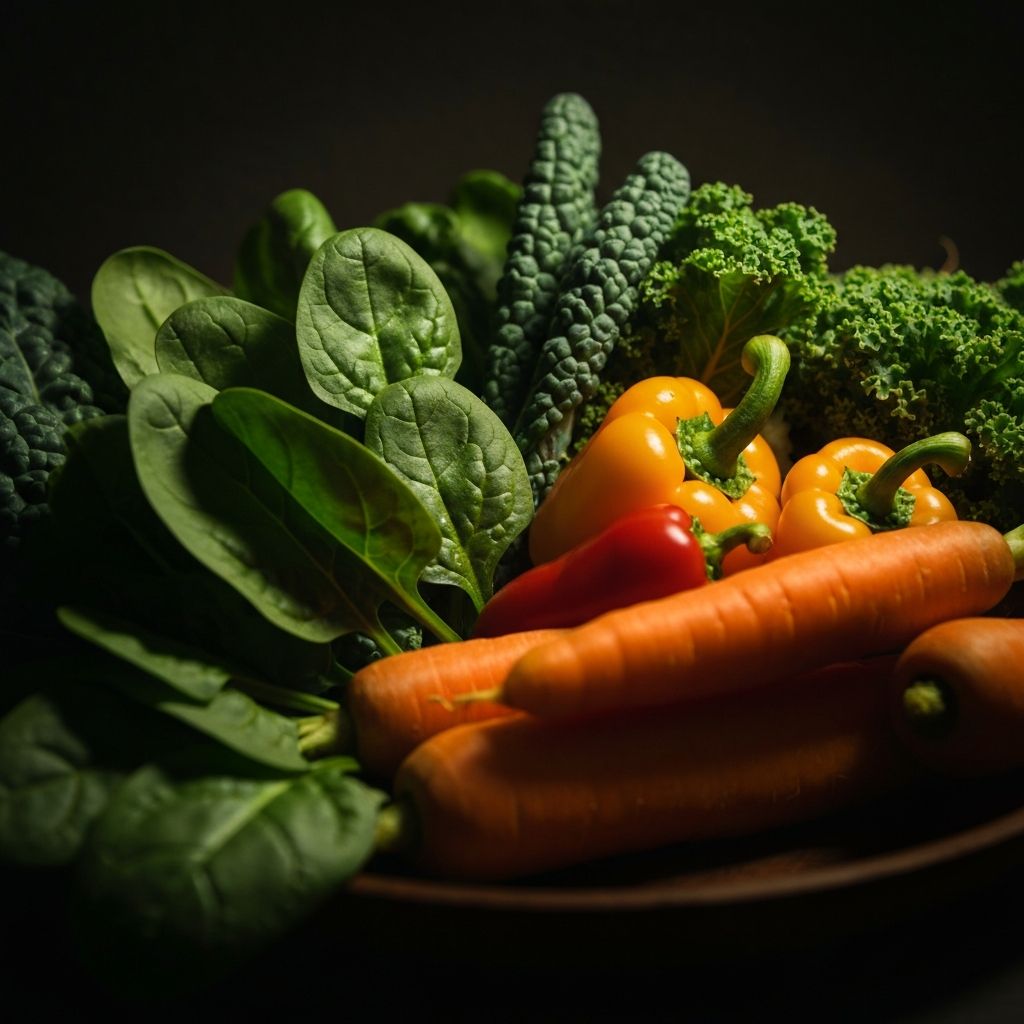
Vitamins A, D, E, and K are classified as fat-soluble, meaning they are absorbed alongside dietary fats and can be stored in adipose tissue and the liver. Vitamin A participates in visual cycle chemistry and epithelial maintenance. Vitamin D is synthesized in the skin through ultraviolet exposure and also obtained from select food sources, and it plays a key role in calcium regulation. Vitamins E and K are involved in antioxidant processes and coagulation pathways respectively.
These vitamins are found in concentrated form in foods such as leafy green vegetables, egg yolks, oily fish, dairy products, and certain plant oils.

Water-Soluble Vitamins
The B-vitamin complex and vitamin C are water-soluble, meaning they are not stored to the same extent and require more regular dietary replenishment. B vitamins are cofactors in energy metabolism, DNA synthesis, and the functioning of the nervous system. Vitamin C participates in collagen biosynthesis and functions as a reducing agent in several enzymatic reactions.
Citrus fruits, berries, whole grains, legumes, and green vegetables are notable sources of water-soluble vitamins across diverse diets.
Essential Minerals
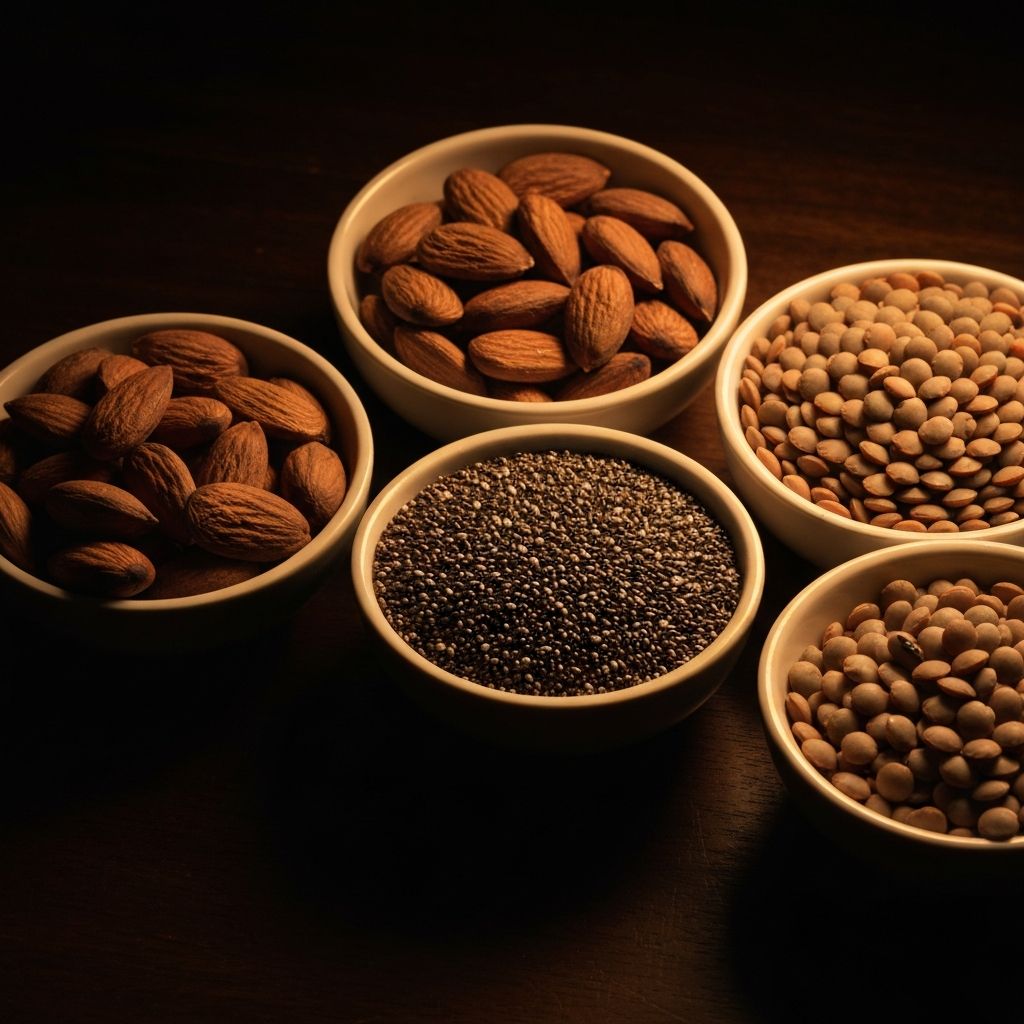
Minerals are inorganic elements required for structural and regulatory functions. Calcium and phosphorus are primary constituents of bone matrix. Iron is central to hemoglobin, the protein responsible for oxygen transport in red blood cells. Zinc participates in over three hundred enzymatic reactions. Magnesium is a cofactor in ATP synthesis and is involved in muscle contraction regulation.
Diverse whole food consumption, including nuts, seeds, legumes, whole grains, and leafy greens, generally supports adequate mineral intake across most dietary patterns.
Hydration: The Often Overlooked Component
Water constitutes the majority of total body mass and is involved in virtually every physiological process. Its role in nutrition is fundamental yet frequently underrepresented in dietary discussions.
- Water functions as the primary medium for biochemical reactions, providing the aqueous environment in which cellular processes occur.
- It facilitates the transport of nutrients, gases, and waste products through the circulatory system and across cellular membranes.
- Temperature regulation relies substantially on water through mechanisms of evaporative heat loss and circulatory redistribution.
- Digestive processes depend on water for the secretion of digestive fluids, the breakdown of food particles, and the movement of material through the gastrointestinal tract.
- Kidney function requires adequate fluid intake to facilitate the filtration and excretion of metabolic byproducts.
- Numerous plant-based foods, including cucumbers, celery, citrus fruits, and leafy greens, contribute meaningfully to overall fluid intake alongside direct water consumption.
- Herbal infusions and minimally processed beverages provide hydration while introducing secondary compounds found in botanicals.
- The body's hydration requirements vary with environmental temperature, physical exertion, and individual physiological factors.
Understanding Food Groups and Proportions
Food grouping models offer a systematic means of categorizing dietary components and conceptualizing balanced intake across different nutritional categories.
Grains and Cereals
Whole grains, including wheat, rice, oats, barley, and maize, form a foundational caloric base in most global dietary traditions. Their outer bran layers contain fiber, B vitamins, and minerals that are diminished in refined grain processing.
Vegetables
Vegetables are among the most nutrient-dense food categories relative to their caloric content. They provide a wide spectrum of vitamins, minerals, fiber, and secondary metabolites, with considerable variation depending on color, preparation method, and botanical family.
Fruits
Fruits provide natural sugars alongside fiber, vitamin C, potassium, and a diverse range of phytochemicals. Their consumption patterns vary significantly across cultures and seasons.

Protein Sources
Protein-rich foods encompass both animal and plant-based categories. Legumes, lentils, tofu, eggs, dairy, fish, and poultry each present distinct amino acid profiles, preparation characteristics, and cultural applications.
Dairy and Alternatives
Dairy products provide calcium, protein, and fat-soluble vitamins. Plant-based alternatives derived from nuts, oats, or legumes represent different compositional profiles and are used across a range of dietary frameworks.
Fats and Oils
Culinary fats and oils, derived from plants or animals, contribute to flavor, texture, and the absorption of fat-soluble nutrients. Olive oil, flaxseed oil, and avocado-based preparations are examples frequently referenced in balanced dietary frameworks.
Culinary Approaches and Preparation Methods
The manner in which foods are handled, stored, and prepared exerts a demonstrable influence on their nutritional composition and the bioavailability of their constituent components.

Raw Preparation
Consuming vegetables and fruits in their uncooked form preserves heat-sensitive vitamins, particularly vitamin C and several B vitamins. Raw preparation also retains naturally occurring enzymes and maintains the structural integrity of dietary fiber. Thorough washing and mindful sourcing are associated with raw food safety.

Steaming and Boiling
Moist heat methods introduce water into the cooking process. Steaming, where food does not contact water directly, generally results in lower nutrient leaching than boiling. Boiling is effective for softening legumes and grains, making starches more digestible, and reducing the presence of certain naturally occurring antinutritional factors in raw legumes.

Dry Heat and Oil-Based Methods
Roasting and baking apply dry heat, which can enhance flavor through caramelization and Maillard reactions. Incorporating culinary fats, such as olive oil, during cooking supports the absorption of fat-soluble vitamins from accompanying vegetables. Temperature management is a key consideration in preserving the fatty acid profiles of heat-sensitive oils.
The Journey of Dietary Habits: A Historical Perspective
Human dietary patterns have shifted substantially over millennia in response to ecological conditions, agricultural developments, trade, and cultural exchange. These transitions provide context for understanding the diversity of contemporary nutritional approaches.
Gathered and Hunted Foods
Early human diets were shaped by seasonal and geographic availability. Foraged plant material, roots, fruits, nuts, and animal foods were consumed in patterns dictated by local ecosystems, with significant variation across regions and climates.
The Agricultural Transition
The domestication of crops and livestock, beginning approximately ten thousand years ago, fundamentally altered human nutrition. Cereal grains became dietary staples, and permanent settlement enabled more predictable food supplies alongside new food preservation and fermentation techniques.
Trade, Spice, and Culinary Exchange
Expanding trade routes introduced new ingredients across continents. The Columbian Exchange of the 15th and 16th centuries brought potatoes, tomatoes, maize, and cacao to Europe, while redistributing wheat and animal husbandry practices globally, reshaping regional cuisines fundamentally.
Industrialization and Nutritional Science
Industrial food processing introduced new preservation and distribution capabilities, while enabling scale that reshaped global food access. Concurrently, the 19th and 20th centuries saw the systematic identification of vitamins and minerals, providing scientific grounding for nutritional discourse that continues to evolve.
Sustaining Nutritional Balance: General Considerations
Several broader frameworks inform how nutritional balance is conceptualized beyond individual food components, touching on behavioral, environmental, and contextual dimensions of food intake.
Mindful Engagement with Food
Mindful eating is a concept drawn from broader mindfulness traditions and refers to deliberate, attentive engagement during the act of eating. Research in behavioral nutrition has explored the relationship between eating pace, environmental cues, and the experience of satiety, noting that slowed consumption and reduced distraction during meals are associated with greater awareness of hunger and fullness signals.
Local and Seasonal Food Systems
Food sourced from local agricultural systems and consumed in season represents a distinct approach to provisioning. Seasonal produce is harvested at closer proximity to its optimal nutritional state and requires less post-harvest processing and extended cold chain logistics. Traditional food systems in many regions have historically aligned dietary intake with seasonal availability, creating cyclical patterns of food variety throughout the year.
- Seasonal variation introduces natural diversity across food groups over the calendar year
- Local agricultural systems vary substantially by latitude, climate, and soil composition
- Market infrastructure influences the degree to which local sourcing is practically accessible
- Fermentation and preservation historically extended seasonal produce into colder periods
Environmental Context of Food Production
Food production systems operate within environmental contexts that encompass land use, water resources, and ecological relationships. The composition of soils influences the mineral content of plant foods grown within them. Water availability shapes the range of crops cultivable in a given region. These systemic factors provide backdrop to the nutritional diversity of any particular food culture or geographic zone.
Dietary Variety as a Structural Principle
Across multiple nutritional frameworks, variety is consistently presented as a structural principle. Different foods contribute distinct micronutrient profiles, and no single food item encompasses the full range of compounds the body requires. Variety across plant families, grain types, protein sources, and preparation methods distributes the acquisition of nutrients across a broad dietary base.
Navigating Common Nutritional Misconceptions
Nutritional information circulating in popular media often contains oversimplifications or inaccuracies. The following addresses several recurring points of confusion through a factual, contextual lens.
Are all carbohydrates nutritionally equivalent?
No. Carbohydrates differ substantially in their molecular structure, fiber content, and glycemic characteristics. Whole grain oats and refined white sugar both belong to the carbohydrate category, but their effects on digestion, blood glucose, and micronutrient contribution are markedly different. Structural complexity, not category membership, is the more meaningful distinction.
Is dietary fat inherently problematic?
Dietary fat is a necessary macronutrient. The characterization of fat as broadly harmful emerged from mid-20th century epidemiological studies that have since been contextualized more carefully. Fatty acid type, food source, and overall dietary pattern are more relevant considerations than fat as an undifferentiated category.
Do natural or organic labels indicate higher nutritional value?
Labeling terminology such as "natural" carries no standardized nutritional definition in most regulatory frameworks. Certified organic designations primarily address agricultural practices and permitted input substances rather than making quantitative claims about nutrient density. Nutritional value is better assessed by examining food composition data.
Is protein intake a concern only for physically active individuals?
Protein requirements exist for all individuals and are not exclusive to those engaged in structured physical activity. Protein supports tissue maintenance, immune function, enzyme synthesis, and numerous other processes throughout the lifespan. Requirements shift with age, physiological state, and individual metabolic factors.
Does cooking destroy all nutritional value in vegetables?
Cooking methods vary in their effects on different nutrient categories. Heat-sensitive vitamins are reduced by prolonged cooking, particularly in water. However, cooking can also increase the bioavailability of certain compounds, such as lycopene in tomatoes and beta-carotene in carrots, by breaking down cell walls. The relationship between preparation method and nutritional outcome is specific to the compound and food in question.
Are supplements a direct equivalent to food-sourced nutrients?
Isolated nutrients in supplement form do not replicate the full compositional context of whole foods. Foods contain interacting compounds, cofactors, and fiber that influence absorption and metabolic integration. Supplementation has specific research-supported applications, but general nutritional frameworks continue to center whole food sources as the primary basis for micronutrient acquisition.
Glossary of Nutritional Terms
The following definitions provide reference for terminology commonly encountered in nutritional literature and educational materials.
Macronutrient
A dietary compound required by the body in relatively large quantities and which provides caloric energy. Carbohydrates, proteins, and fats are the three macronutrient categories.
Micronutrient
A vitamin or mineral required by the body in small quantities to support normal physiological function. Unlike macronutrients, micronutrients do not provide caloric energy.
Bioavailability
The proportion of an ingested nutrient that is absorbed from the gastrointestinal tract and made available for use in physiological processes. Bioavailability is influenced by food form, preparation, and individual digestive function.
Dietary Fiber
A heterogeneous group of non-digestible carbohydrate compounds found in plant cell walls. Fiber resists enzymatic digestion in the small intestine and passes into the large intestine where it undergoes fermentation by the resident microbial community.
Essential Amino Acids
Amino acids that the human body cannot synthesize in adequate quantities independently and must therefore be supplied through dietary intake. There are nine essential amino acids recognized in standard nutritional classification.
Phytochemicals
Biologically active compounds produced by plants, distinct from conventional nutrients. They include a broad range of chemical classes and are the subject of ongoing nutritional research regarding their roles in human physiology.
Glycemic Index
A numerical scale that classifies carbohydrate-containing foods based on the rate at which they raise blood glucose concentration compared to a reference substance. The index provides a relative measure of carbohydrate quality in metabolic contexts.
Antioxidants
Compounds, both endogenous and dietary, that interact with reactive oxygen species and reduce their potential to modify cellular components. Vitamins C and E, as well as numerous phytochemicals, are classified as dietary antioxidants.
Fermentation
A metabolic process in which microorganisms convert substrates such as sugars into organic acids, alcohols, or gases. In food preparation, fermentation alters flavor, texture, and compositional properties and has been employed across cultures for preservation and preparation purposes.
Omega Fatty Acids
Polyunsaturated fatty acids classified by the position of their first double carbon bond. Omega-3 and omega-6 fatty acids are of particular interest in nutritional literature; several are classified as essential because they cannot be synthesized endogenously and must be obtained from food.